Let's address the elephant on the beach: yes, some of Shirahama's white sand was imported from Australia. This is the fact that every guidebook mentions, usually with a hint of disapproval, as if a beach's authenticity depends on where its sand originated. I think that misses the point entirely. Shirahama has been a hot spring resort for over 1,300 years — the name literally means "white beach" — and the sand, wherever it came from, is just one element of a place that offers something no other beach town in Japan can: the combination of ocean swimming and onsen soaking in the same afternoon, possibly in the same hour.
The Beach Itself
Shirahama Beach stretches about 640 meters along a gentle bay. The sand is fine and genuinely white — whether it's Australian or a mix of local and imported, the result is a beach that looks and feels the part. The water is calm and swimmable during the official season (mid-July to late August), with lifeguards on duty and a row of beach houses offering food, drinks, and shade.
What makes Shirahama unusual for a Japanese beach is its urban backdrop. The town rises immediately behind the sand, with hotels, restaurants, and onsen facilities creating a resort atmosphere that's more Mediterranean Riviera than remote Japanese island. Some people love this; others find it claustrophobic. I think it depends on what kind of beach day you're after. If you want solitude, Shirahama isn't it. If you want to swim, soak, eat, and sleep all within a five-minute walk, it's hard to beat.
Saki-no-Yu: The Onsen on the Beach
This is Shirahama's killer feature. Saki-no-Yu is an open-air hot spring bath located on a rocky outcrop right at the edge of the beach. You sit in naturally heated mineral water while waves crash against the rocks below you, close enough that the spray occasionally reaches your face. At sunset, looking out over the Pacific from a 50-degree bath while the sky turns orange — this is one of those experiences that justifies the entire trip.
Saki-no-Yu is one of Japan's oldest onsen, mentioned in the Nihon Shoki (Chronicles of Japan) from the 8th century. It's also one of the most affordable — ¥600 for adults, no time limit. Bring your own towel or rent one for ¥100. The bath is gender-separated, and no swimwear is worn (standard for onsen).
Beyond the Beach: The Kumano Connection
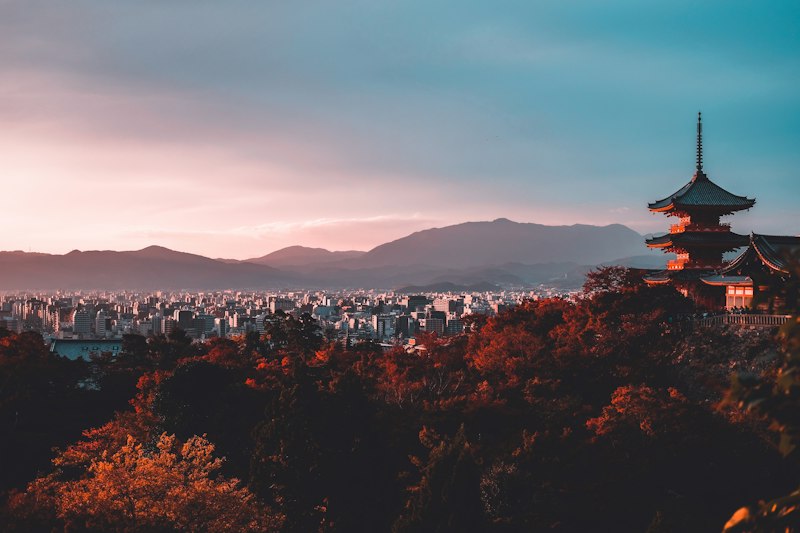
Shirahama is the gateway to the Kumano region — a mountainous, deeply spiritual area that's home to the Kumano Sanzan (three grand shrines) and the Kumano Kodo pilgrimage routes, now a UNESCO World Heritage Site. You don't have to be a pilgrim to appreciate the area. Even a day trip to Kumano Nachi Taisha — with its iconic three-story pagoda set against Nachi Falls, Japan's tallest waterfall — is worth the 90-minute bus ride from Shirahama.
The coastal drive itself is spectacular. Route 42 hugs the Pacific coastline between Shirahama and Kushimoto, passing through fishing villages, past sea cliffs, and over bridges that span turquoise inlets. If you have a car, this drive alone is worth the trip to Wakayama.
The Food
Wakayama is one of Japan's great food prefectures, and Shirahama benefits from its position on the coast. Highlights include:
- Mehari-zushi: Rice balls wrapped in pickled mustard leaves — simple, portable, and delicious
- Kue nabe: Hot pot made with longtooth grouper, a local specialty that's rich and delicate
- Uma-ido ramen: Wakayama's signature ramen — pork bone and soy sauce broth, served with a side of mackerel sushi
- Local citrus: Wakayama produces most of Japan's yuzu and sudachi; the juice appears in everything from dressings to cocktails
Practical Information
- Getting there: Limited express train from Shin-Osaka via Tennoji to Shirahama (2.5 hours); highway bus from Osaka (3 hours)
- Getting around: Town is walkable; buses serve surrounding attractions; rental car recommended for Kumano area
- Best time: April–May and October–November for pleasant weather; July–August for beach season
- Onsen note: Many hotel onsen are guests-only, but several public baths (including Saki-no-Yu) welcome day visitors
- Budget: Ryokan from ¥8,000/night (often with meals); resort hotels ¥15,000–¥30,000/night
Sitting in a 50-degree bath as the Pacific crashes against the rocks below and the sky goes pink — Shirahama doesn't need to justify its sand. It just needs you to show up at sunset.
Final Thoughts
Shirahama isn't the most beautiful beach in Japan, and it isn't the most remote. What it is, uniquely, is a beach town that has been doing its thing for over a millennium — mixing salt water and hot water in a way that no other place manages. The imported sand, the resort hotels, the crowds in August — they're all part of the package, and the package works. Come for the onsen-on-the-beach moment. Stay for the Kumano coast. Leave understanding that some places don't need to be wild to be wonderful.